“We Just Want More Time”
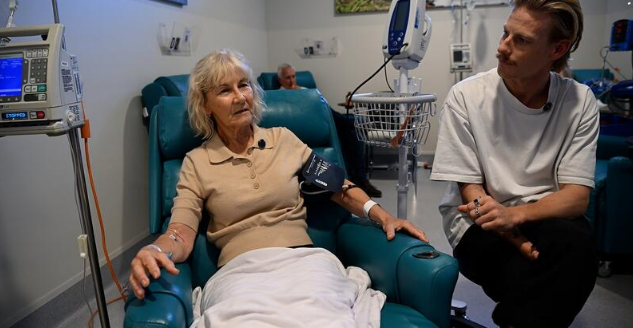
On the Gold Coast, tucked inside the calm, sunlit corridors of Robina Private Hospital, something quietly meaningful is happening. Once a month, the day surgery recovery room transforms into a space where patients with early Alzheimer’s receive a new type of treatment — not a cure, but a chance to slow the condition and hold onto clearer days for longer.
For many families, this opportunity means everything.
Tracey & Gavin
Tracey, 61, began noticing memory and vision changes several years ago, leading to an eventual diagnosis of early‑stage Alzheimer’s. The news was devastating for her and her husband, Gavin, but together they chose to pursue newly available treatment at Robina Private Hospital. Tracey now receives monthly donanemab infusions, supported closely by her family. Their goal is simple: to slow the disease and protect as much quality time as possible. For them, even small gains feel meaningful.
Raewyn & Harrison
Raewyn, 67, spent more than a year searching for answers before finally receiving an Alzheimer’s diagnosis. She still lives an active lifestyle, but the memory lapses have become harder to ignore. After careful assessment, she began treatment too, although side‑effects meant her schedule needed to be adjusted. Her son Harrison attends appointments with her, helping her stay grounded and positive. For Raewyn, the hope of staying independent for longer makes the process worthwhile.
Why These Stories Matter
Alzheimer’s is becoming more common in Australia, especially as the population ages. Many families find themselves searching for answers, wondering how to protect the moments that bring them joy and connection.
Tracey and Raewyn’s stories are not dramatic. They are honest, everyday stories of people trying to hold on — to routines, to independence, to the people they love.
In a small room at Robina Private Hospital, surrounded by beeping monitors and caring hands, these families are fighting for time. Time to talk, to laugh, to dance, to sit together in the summer light.
And while these new treatments don’t promise miracles, they offer something deeply meaningful:
A chance to slow things down.
A chance to stay present for a little longer.
A chance to hold on to what matters most.
The Role of the Memory Clinic: Care That Goes Beyond Medicine
Much of the guidance at Robina Private Hospital comes from Dr Penny King, a specialist in older‑age psychiatry who established the hospital’s memory clinic 15 years ago. She helps patients understand exactly what these new medicines can and cannot do.
These treatments, she explains, are designed to remove amyloid — a protein linked to Alzheimer’s — from the brain. For some people in the early stages, this may slow the rate of decline. But it won’t restore abilities or reverse existing damage.
Families often arrive hopeful but uncertain. Dr King walks them through safety checks, genetic testing, brain scans, and the potential for side effects like swelling or bleeding. She also helps them understand that the cost of treatment can be significant, depending on the schedule and individual needs.
Even so, many families decide that if the treatment offers a chance to slow deterioration — even by months — it’s worth trying.